
Analysis of Evictions from Social Housing
This analysis is based on data obtained through FIPPA Disclosure LTB-25-033-F (Access Decision dated January 22, 2026), alongside publicly reported figures. It identifies significant trends and reporting discrepancies in eviction data affecting Toronto Community Housing Corporation (TCHC) tenants.
Evictions Have Increased Dramatically
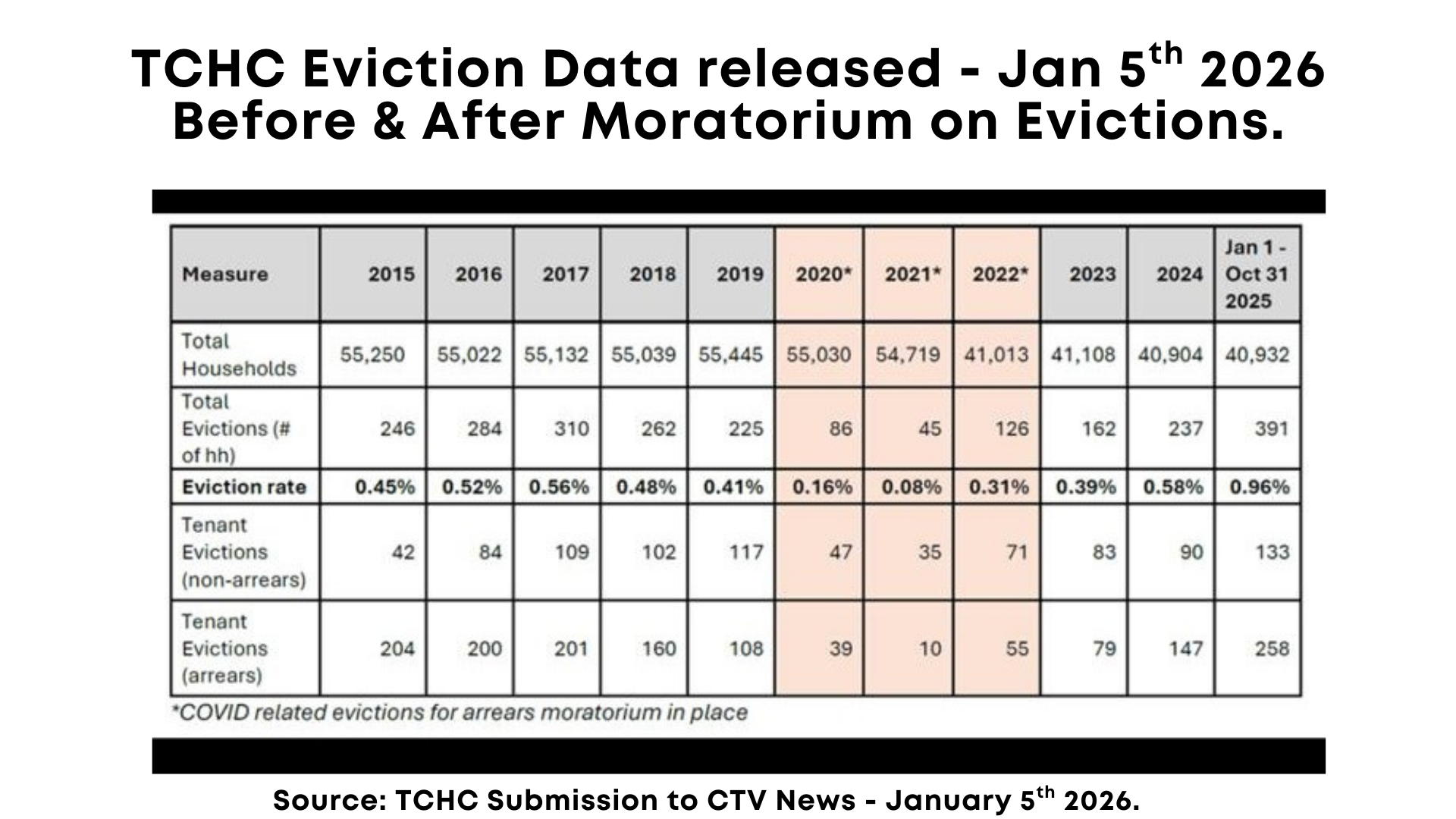
Even using TCHC’s own reported figures, evictions have more than doubled in just two years, while the total number of tenant households has declined.
Evictions from social housing increased by over 100% in two years, alongside the persistence of “hidden evictions”, including coerced lease removals and informal displacement that never appear in official statistics.
Evictions trigger homelessness, family separation, long-term trauma, and deep community destabilization.
Social housing evictions are preventable.
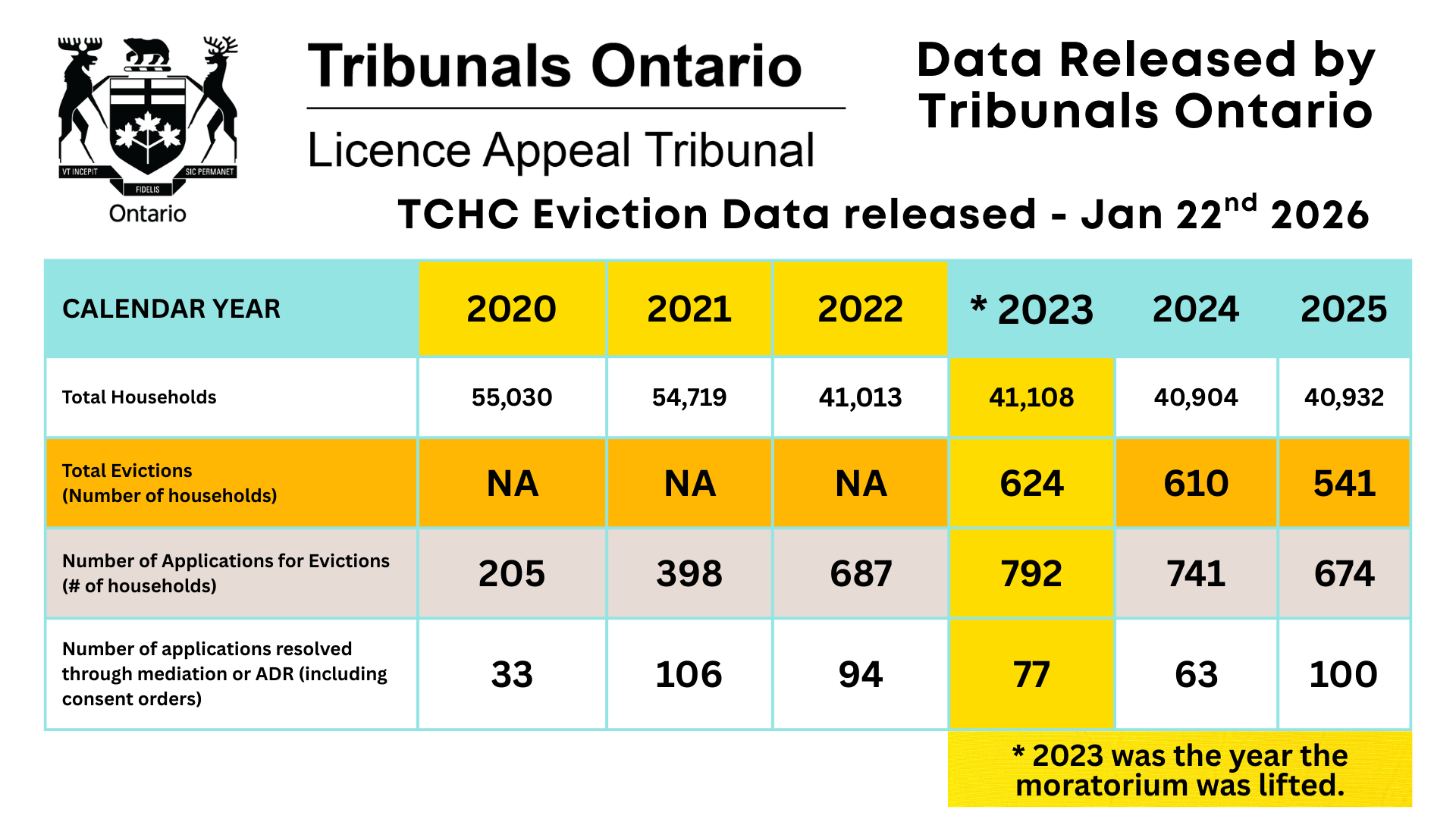
Highest Post-Moratorium Evictions on Record - 2023.
-
Evictions recorded by Tribunals Ontario (2023): 624
-
Evictions publicly reported by TCHC (2023): 162
-
Difference: 462 additional households
Percentage Increase:
(462 ÷ 162) × 100 = 285% higher than publicly reported by TCHC.
2023 represents the worst post-moratorium year for TCHC tenants.
2023 – Lowest Use of Mediation / ADR
-
Applications resolved through mediation or ADR (including consent orders): 77
This marks the lowest use of alternative resolution mechanisms following the lifting of the eviction moratorium, during the same year evictions peaked.

2025 – Ongoing Reporting Gap
(January 1 – October 31, 2025)
-
TCHC publicly reported evictions: 391
-
Tribunals Ontario data: 541
-
Difference: 150 additional households
Percentage Increase:
(150 ÷ 391) × 100 = 38% higher than publicly reported by TCHC.
Tribunal data reflects substantially more eviction outcomes than cited publicly by TCHC.
Important Context Regarding LTB Data
It is important to note that the Landlord and Tenant Board’s case management system does not track final hearing outcomes in a way that directly confirms whether an eviction was physically enforced. Many eviction orders, particularly arrears-based orders are voidable if tenants pay by the deadline.
The LTB is not notified whether tenants void the order or vacate the unit after issuance. Accordingly, orders containing eviction provisions do not always correspond to enforced evictions.
In addition, the number of denied applications was not tracked between 2020 and 2022.
Despite these limitations, the scale and direction of the trend remain deeply concerning.
Systemic Anti-Black Racism & Accountability
42% of TCHC tenants identify as Black.
Without race-disaggregated eviction data, it is not possible to determine whether eviction outcomes disproportionately affect Black tenants. Given Toronto’s documented racial housing inequities, transparent and disaggregated reporting is essential to assess potential systemic anti-Black impacts.

What Is at Stake
Social housing is intended to provide permanent stability for people with the lowest incomes and highest needs. Increasingly, however, it is functioning as a pipeline to homelessness.
This is not a failure of tenants.
This is a failure of policy.
The tragic death of a senior documented in the Al Gosling Inquiry is a stark reminder that eviction is not an administrative outcome, it is a life-altering event that can have fatal consequences.

Call to Action
Tenant leaders and community organizations are calling for:
-
An immediate City-wide moratorium on evictions from social housing.
-
Transparent, race-disaggregated eviction reporting.
-
Full investment in eviction prevention, rent banks, and early intervention supports.
City Council must take a clear and principled stand against homelessness by implementing an immediate moratorium on evictions from social housing.
One eviction is too many.
RESOURCES:
- Link to the Full Presentation on Evictions Data.
- Read the Full Media Release Here